
Fall Theology Conference 2026
Rochester, NY - October 3
“Spirit and Scripture”
Schedule now available!
The CATA Fall Theology Conference will be held on Saturday, October 3, 2026, at Northeastern Seminary at Roberts Wesleyan University in Rochester, NY. The theme for this year’s conference is “Spirit and Scripture,” an invitation to theological reflection on the person and work of the Holy Spirit, the nature and interpretation of Scripture, and the relationship between the two.
Registration now open!
Registration
Registration for the 2026 CATA Fall Conference is now open. We look forward to welcoming you to this year’s conference.
Registration Fee: $35
* Cost includes a light breakfast, lunch, and afternoon refreshments.

Program
The 2026 CATA Fall Theology Conference will feature a full day of plenary presentations and parallel sessions exploring the conference theme, “Spirit and Scripture.” The program brings together scholars from a range of theological disciplines to consider the work of the Holy Spirit, the interpretation of Scripture, spiritual formation, Christian discernment, public ethics, and the relationship between faith and contemporary culture.
The conference will feature two plenary presentations by Dr. Ephraim Radner, , along with three sessions of parallel papers addressing a wide range of biblical, theological, historical, and interdisciplinary topics.
Title & Abstract
Daniel Stulac
Learning To Be Here: Canonical Reflections on the Canadian Prairie
At an exegetical level, this plenary address describes ways in which the books of John and Acts expand upon the Old Testament’s place-based creation theology. John’s portrait of the incarnate Christ makes sense only with reference to the Old Testament’s abiding regard for the holy materiality of God’s good earth, while Acts asserts that the Holy Spirit makes concrete hope for life in the Promised Land radically available to everyone, everywhere. In sum, the gospel proclaimed in both books does not “de-place” Israelite faith, but rather “all-places” Israelite faith by taking seriously the Old Testament’s vision of a landed worship community composed of Israelites and Gentiles alike (Acts 13:47; see Isa 49:6). In the New Testament, “Promised Land” is any materially particular place that the Holy Spirit generates faith in Christ.
At a theological level, the address puts these observations into dialogue with the work of agrarian and Kentucky farmer, Wendell Berry, as well as with the speaker’s agroecological experiences in rural Saskatchewan. For any Christian church that imagines itself to be a redemptive witness within the modern, industrial, disintegrated, unholy, and idolatrous culture that presently governs North America, Berry’s unswerving fidelity to his particular place helps to prompt a crucial question: How might a contemporary gathering of Jesus-followers, aware of its creaturely “placed-ness” before its Creator, worship God in ways consistent with this theological truth? How do we learn to “be here” as a mode of missional resistance over against the cultural rootlessness with which we are surrounded?
Public Lecture
Pierre Gilbert
Real Threat or Nothing Burger? The Potential Revocation of Churches’ Charitable Status
In its 2025 report, the House of Commons Finance Committee recommended revoking charitable status for churches and other religious organizations. Though the recommendation was not adopted, its inclusion without prior public consultation served as a wake-up call to many. Drawing from a major study for the Frontier Centre for Public Policy, retired professor Pierre Gilbert will examine the historical, social, and ideological factors behind this recommendation and what it may signal for the Church's future in Canadian society. Gilbert will also explore the fiscal, cultural, and theological implications of such a policy change. The issue goes beyond tax privileges — it speaks to the Church's vital role as a bulwark against the rise of secularism, a repository of truth, and a voice of hope for future generations. His presentation is both a policy analysis and a passionate call for the Church to awaken, engage the culture, and remain faithful to its prophetic mandate.
Keynote Speaker
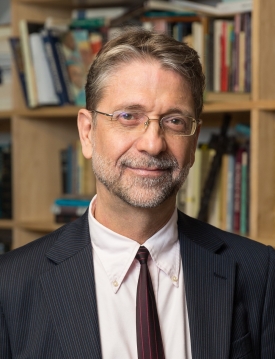
Ephraim Radner
Dr. Ephraim Radner is Professor Emeritus of Historical Theology at Wycliffe College, Toronto School of Theology, where he taught for nearly two decades after many years of parish ministry in the United States and Africa. He holds a PhD from Yale University and specializes in ecclesiology, scriptural hermeneutics, Anglican theology, and the theological significance of time and history. He is the author of numerous books, including A Time to Keep: Theology, Mortality, and the Shape of a Human Life (2016) and Time and the Word: The Figural Reading of Scripture (2016), and his work brings together rigorous scholarly inquiry with deep pastoral experience in service of the church.
Call for Papers
Abstract submission for the CATA Fall Conference is now closed. Thank you to everyone who submitted an abstract!
CATA encourages submission of high-quality papers on any topic falling within the disciplines of biblical studies; theological readings of Scripture; historical, systematic, philosophical, moral, and pastoral theology; and interdisciplinary theological work that engages with other academic disciplines. Special consideration will be given to papers that broadly intersect with the conference theme, “Spirit and Scripture.”
Papers should be scholarly presentations of about 25 minutes, aimed at an audience of students, pastors, and faculty from across the spectrum of theological disciplines.
Topics |
|---|
|
Topics in the broad theological disciplines that fall outside of the specific theme of the conference are also welcome. Possible areas of focus within the theme include, but are not limited to:
|
Submission Guidelines |
|---|
|
Important Dates |
|---|
|
|
Topics in the broad theological disciplines that fall outside of the specific theme of the conference are also welcome. Possible areas of focus within the theme include, but are not limited to:
|
|
|
CATA membership is required to present at the Fall conference, though membership is not required prior to the conference date.
Location
The Theology Conference will be held in the Golisano Community Engagement Center at 2280 Westside Drive, Rochester, NY 14624. Signage for event parking will be visible from Westside Drive. Parking will be available in Lot H behind the Community Engagement Center, Lot I in front of Beeson Apartments, and Lot J outside of Davison Hall.
Accommodation Suggestions
Please note: we do not have any blocked rooms or conference rates at these hotels.
About Rochester
- Rochester sits on the southern shore of Lake Ontario and is known as the birthplace of Eastman Kodak — George Eastman’s former mansion is now the George Eastman Museum, the world’s oldest museum dedicated to photography.
- The Strong National Museum of Play, home to the National Toy Hall of Fame, is one of the city’s best-known attractions.
- The Erie Canal runs through the city, with scenic towpaths popular for walking and biking.
- Rochester is a short drive from the Finger Lakes region, if you’d like to extend your stay.